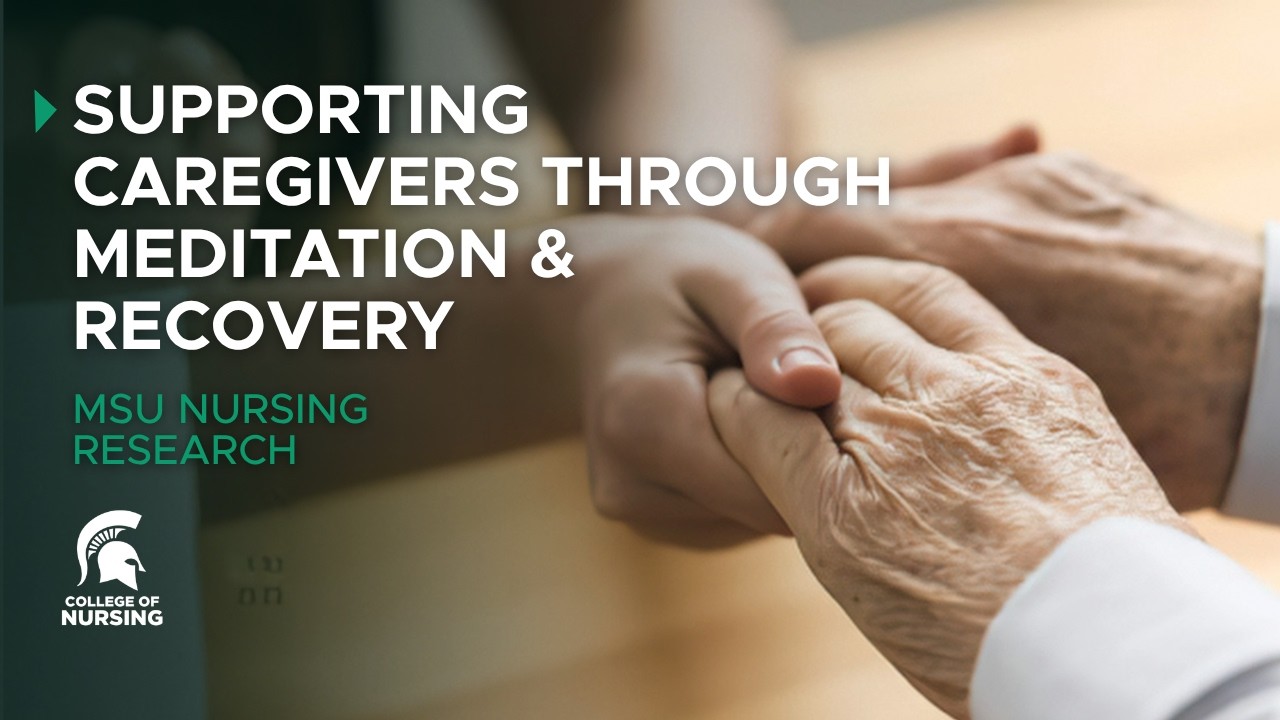
Cancer caregivers often shoulder an invisible burden, providing unpaid, around-the-clock support to loved ones while navigating the emotional toll of end-of-life care. Yet despite their critical role, they remain an often overlooked population in both research and health care support systems.
At the Michigan State University College of Nursing, researchers Rebecca Lehto and Gwen Wyatt are working to change that. Drawing on clinical experience and emerging evidence on holistic care, Lehto is developing interventions aimed not only at patients but also at the family members who care for them.
“Cancer caregivers are often a neglected population,” Lehto said. “They do all this uncompensated work in the home environment, and once the patient is deceased, facing that grief can be enormous.”
The initiative builds on the work of Wyatt, who saw firsthand the needs of patients and families while teaching on an oncology unit.
“When someone has a life-limiting condition, a lot of the barriers fall away,” Wyatt said. “Patients and families become very open about what might be supportive for them.”
That insight helped shape a research approach focused on complementary therapies designed to ease stress and promote emotional well-being for both patients and caregivers. Wyatt said it was a natural progression to begin integrating those therapies into supportive care models.
Many of the therapies center on stress reduction, which researchers say can also lessen strain on the immune system. The intervention combines meditative practices with time spent in natural environments — a pairing Lehto describes as a “bundled intervention.”
“There is a lot of research now evaluating meditative practices in natural environments to help restore attention and improve mood,” Lehto said. “We’re hoping to give caregivers exposure to both meditation and nature simultaneously.”
For study participant Chris Wyatt, who is also the son of Gwen Wyatt, the research reflects lived experience. Wyatt cared for his father during a nearly decade-long battle with cancer and said the emotional demands of caregiving often outweighed the physical ones.
“A lot of it was the emotional support, almost more than the physical,” he said. “Seeing how quickly things changed — that decline — it’s tough. There’s a helplessness that comes with it.”
Wyatt said practices like mindfulness and time outdoors can play a meaningful role in coping with grief.
“Nature helps ground you,” he said. “It gives you a framework for how to deal with grief and lets you be more introspective.”
Researchers hope the intervention will enhance caregivers’ ability to focus, process loss and build long-term resilience. Encouraging reflection and emotional awareness, Lehto said, can provide tools that extend well beyond the caregiving experience.
“We’re hoping it will help caregivers process their grief, improve their capacity to concentrate and build resilience,” she said.
Still, advancing this work is not without challenges. Securing funding for holistic and caregiver-focused research can be difficult, despite growing recognition of its importance. Support from the National Institutes of Health has been instrumental in moving the project forward.
Lehto said the stakes are high. As the population ages and more care shifts to home settings, the number of informal caregivers is expected to rise, making targeted support increasingly critical.
“I feel like what we’re doing has the potential to help humanity in a broad, holistic way,” she said. “Caregiving — and grief — are part of the human experience. Supporting people through that journey matters.”