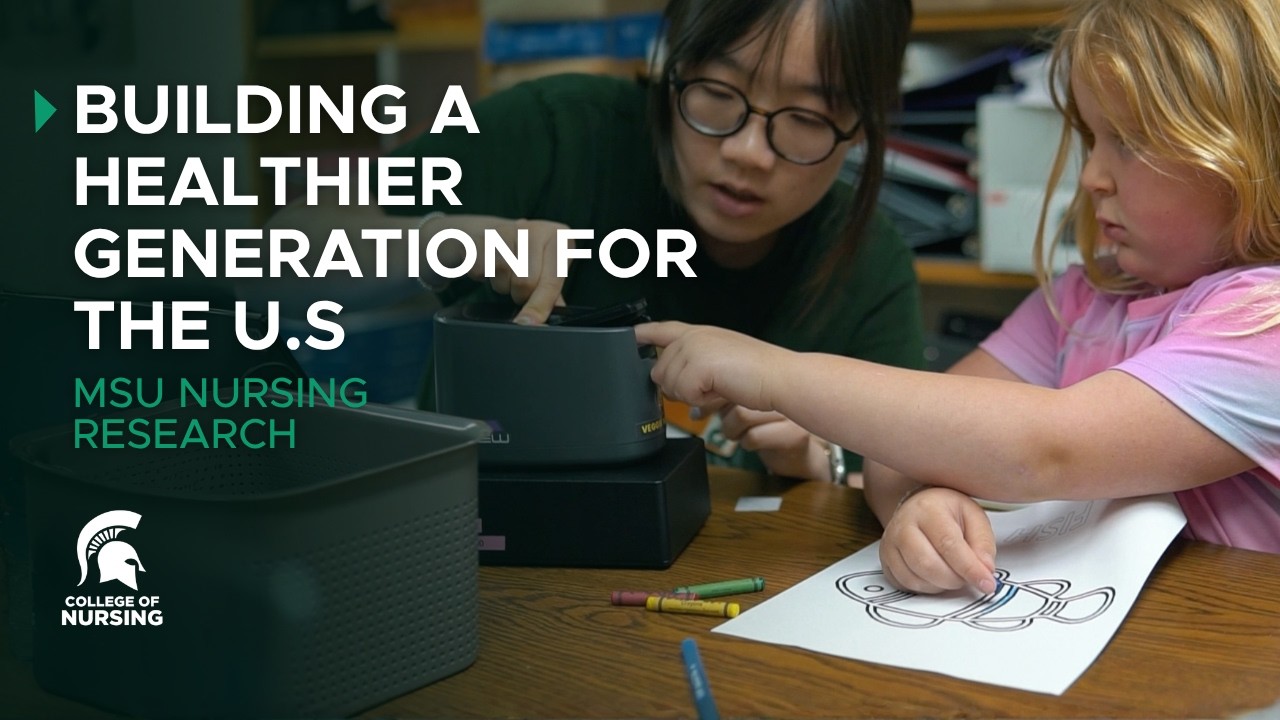
Kaylee Smith-Sanders has seen remarkable progress in her four-year-old son’s eating habits, thanks to the Food, Body and Mind afterschool program at Midland Early Childhood Center. One evening at dinner, she watched in surprise as he eagerly reached for cauliflower and told his younger brother, “You need to eat your vegetables because they're good for you, and you can't grow and be strong like Spider-Man without them.”
The Food, Body and Mind program, led by Professor Jiying Ling, blends nutrition, movement, and mindfulness to improve the overall well-being of children both in and out of the classroom. Supported by a $5.8 million grant from the National Institutes of Health, the program focuses on healthy eating habits, stress reduction through breathing exercises and yoga, and meaningful engagement with families. Through the five-year NIH grant, Dr. Ling is partnering with at least 50 Head Start locations across Michigan, stretching from Detroit to Petoskey and covering both urban and rural communities. These sites include programs in Northwest Michigan, Eastern Michigan, Jackson, Lansing, and Wayne County.
Since joining the program, Smith-Sanders said her son has become more mindful of what he chooses to eat.
“Being able to have the materials to show him visual aspects for these hard lessons has been really beneficial for him actually absorbing the information,” she said. “It's really important to understand what we're feeding our kids and how it affects the way their internal systems grow and develop. You don't build a house on sand, build a house on the foundation.”
The two-part curriculum introduces healthy eating through the ABCs — connecting children to new fruits and vegetables using their senses of touch, sight, smell, and taste. This is followed by engaging movement activities such as yoga, breathing techniques, and other mindfulness practices.
Ling says the feedback has been overwhelmingly positive.
“We have a rather large amount of heartwarming stories from both the teachers and parents,” she said. “Some children are requesting more vegetables during the school mealtime, and they even remind their families to eat healthy and mindfully at home. They remember to use the breathing technique to help them calm down or practice yoga with their families.”
Parents in the program participate in online surveys, while trained MSU data collectors visit classrooms and early childhood centers to gather in-person data such as height, weight, and blood pressure. Additional measurements include waist monitors for physical activity and even hair samples to monitor cortisol levels, a marker of stress.
Ling emphasized the importance of involving families — even with their busy schedules.
“Engaging with parents is very powerful because, you know, they have very busy schedules,” she explained.
The team used creative tools to stay connected, such as sending letters from the children, sharing testimonies, and sending updates through text messages.
“We want to teach them to be mindful eaters instead of being judgmental eaters,” she added.
Assistant Data Manager Ethan Yaroch, who helped collect data for the project, said the work being done through Food, Body and Mind is laying important groundwork for future generations.
“We can offer the correct recommendations for how to keep themselves healthy in the future and how they can raise their kids to be healthier,” Yaroch said.
Renee Clark, an educator at Midland Early Childhood Center, said she strongly believes in the mission of the program.
“I believe wholeheartedly in the program of helping, not only children, but families and educating children and families,” Clark said. “It isn't just all about ABCs and one, two, three. It's also about healthy living and being part of your family, part of your community.”
She added that the hands-on approach was key in engaging young children.
“When we can bring in tools that we were given, bringing in fruits and vegetables for them to touch, to feel, to smell — using all those senses — it really makes a connection. It's learning hands-on. The kids wear aprons and hats and they’re official taste testers,” she said. “So if we're here providing services and opportunities where children can learn about eating healthily, learning how to problem-solve, learning how to be empathetic to each other — it's a win-win. You can't go wrong.”
Looking ahead, Ling hopes to expand the program to reach even more children — from toddlers to older students — and apply it in settings like public schools, afterschool programs, and parent workshops.
For families like Smith-Sanders’, the impact of Food, Body and Mind is clear — and its continuation is vital.
“If programs like this got cut … that's a rabbit hole I try to stay out because it’s huge. It will greatly, greatly impact my children.”