

Spartan Nurse Nation: Eric Vachon
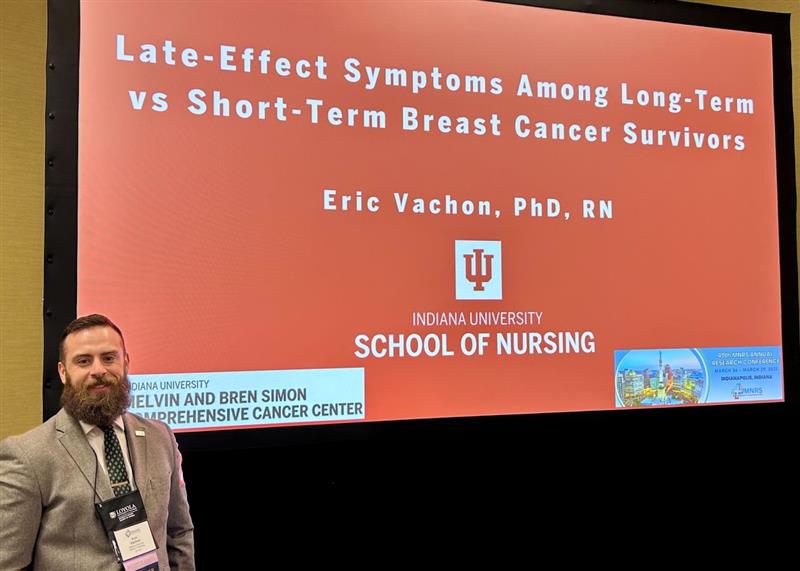
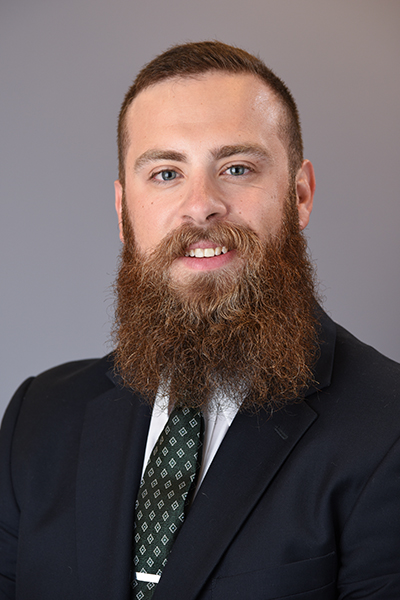
Eric Vachon, PhD '18, is dedicated to providing Hoosiers with accessible cancer symptom management tools — a commitment that began long before he moved to Indiana.
After earning his BSN from Hope College, Vachon joined the PhD program at the MSU College of Nursing. He became a graduate research assistant on the team of University Distinguished Professor Emeritus Barbara Given and Professor Emeritus Bill Given, where Vachon worked on their research specializing in the adherence and symptom management for patients who are receiving chemotherapy through oral medicines.
“Managing symptoms can be quite overwhelming, particularly for patients who are taking oral agents,” explained Vachon. “They are not going in as frequently to receive an IV chemotherapy or radiation, like what we think of for most cancer treatments, so they don't interact with providers as often.”
After receiving his PhD, Vachon earned a NIH-funded postdoctoral research fellowship at Indiana University (IU) School of Nursing, where he has been ever since. The research he did with the Givens during his PhD program helped put him in contact with his current mentor, a cancer researcher, at IU. Now, as an assistant professor at IU School of Nursing, a member of the IU Melvin and Bren Simon Comprehensive Cancer Center, and a researcher at a health research organization called the Regenstrief Institute, Vachon is continuing his mentors’ research.
He is currently working on research that would translate the “Symptom Management Toolkit for Cancer Patients” booklet developed by the Givens into a smartphone application with the support of a local software company. With the app, patients receiving oral chemotherapy agents would complete a survey detailing their symptoms, and the algorithm would provide them with individualized recommendations for managing their symptoms at home.
“It seemed kind of logical with where things are going now to move the toolkit towards a technology-based intervention,” said Vachon. “We're taking those existing symptom management strategies in the booklet and delivering them in more of a tailored approach.”
The app would provide information for cancer patients and their caregivers on strategies for managing their cancer symptoms, prioritizing the most debilitating ones. The intervention will make it easier for individuals to track their symptoms over time and share them with their provider at their next appointment. The app will also recommend when the patient needs to seek medical care based on their symptom profile and then provide them with local resources, utilizing geolocation.
“It is just about making patients more empowered and knowledgeable,” said Vachon. “We are trying to ease some of the difficulty that comes with the cancer journey and make their lives a little bit better.”
The initial app development has been completed, and Vachon is preparing to conduct a pilot trial with patients as the next phase. In the meantime, he is also working on a supplemental adaptation to the platform.
He has been interviewing patients in rural Indiana to determine if it would be beneficial to develop modifications specifically for patients and cancer survivors in remote areas, where there are often lower health literacy rates and fewer resources available.
“A little over a third of our population lives in rural counties, so that's one of our largest disparities here in Indiana,” said Vachon. “At our cancer center, we serve the entire state, so we have a major obligation and priority to serve those individuals who have a little less access to care out in these rural counties.”
Vachon also recently applied for a grant to determine if it would be feasible to add a chat function to the app, where patients could receive emotional support from cancer survivors during their cancer journey. The survivors would not offer medical advice, only a supportive community.
In addition to his oral cancer research, Vachon recently led a National Cancer Institute-funded, state-wide survey of long-term cancer survivors for the IU Simon Comprehensive Cancer Center. Once data analysis is complete, the results will be used to prioritize the needs of cancer survivors and address gaps in care between oncologists and primary care providers.
Since earning his PhD, Vachon has had many accomplishments to celebrate. However, he attributes the MSU College of Nursing’s PhD program for laying the groundwork of his research career, particularly his experience on the Givens' research team.
“I think the experience of being involved with patients in a study, conducting interviews, understanding how protocols work, and being part of an interdisciplinary team is irreplaceable,” stated Vachon. “The Givens really set me up for success.”