

Spartan Nurse Nation: Amber Rose Washington-LaPresta
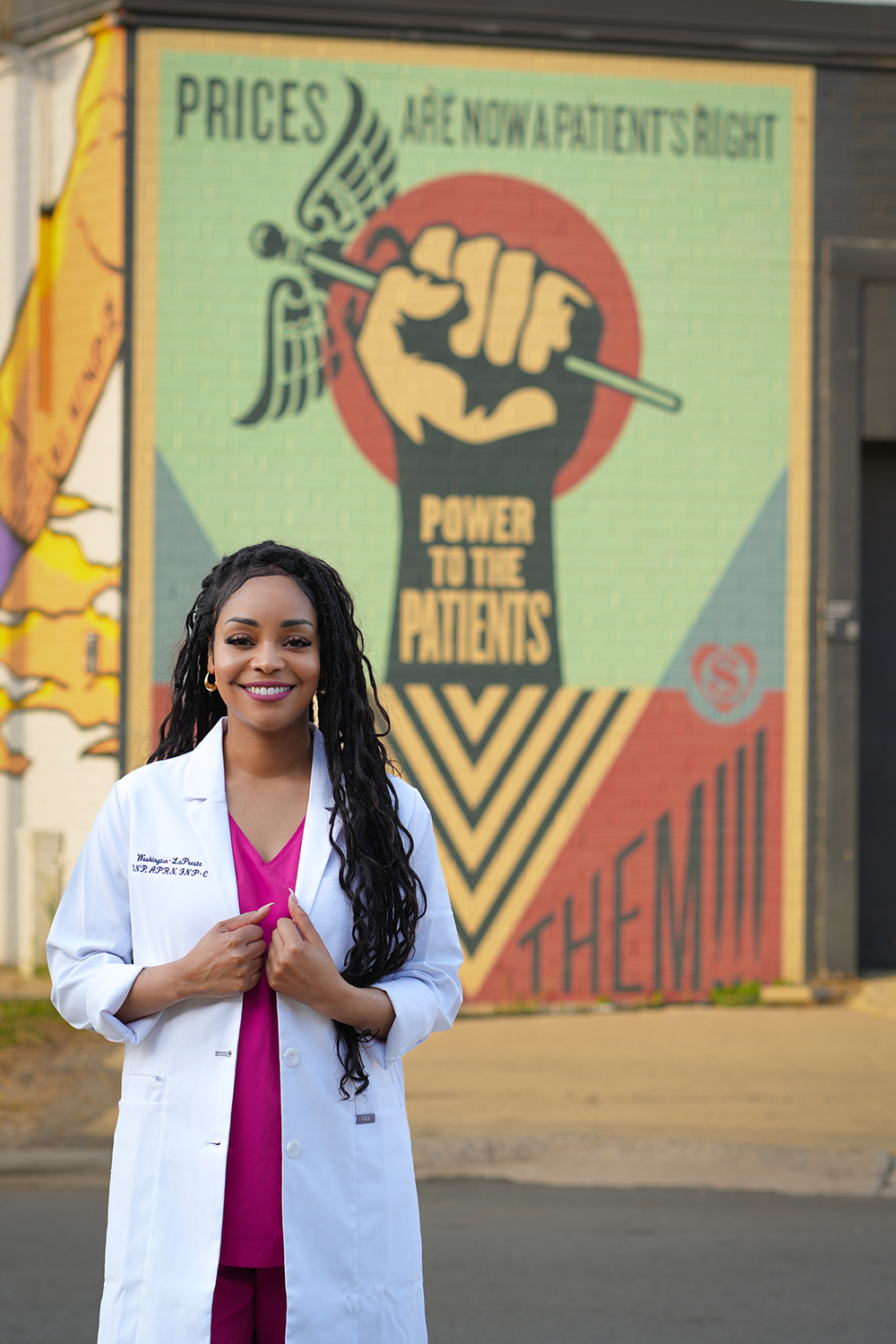
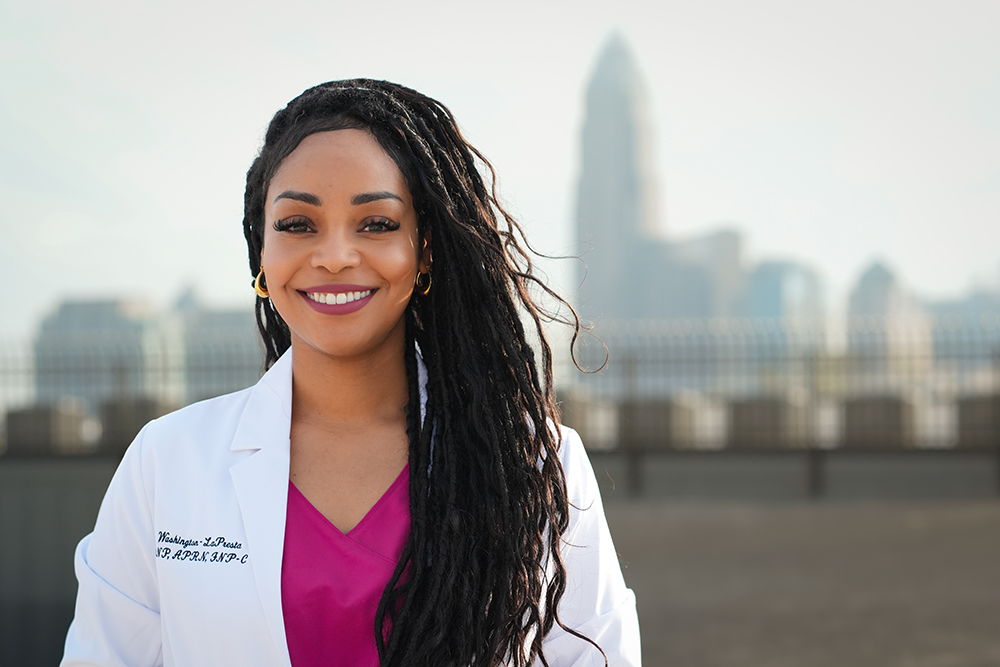
Amber Rose Washington-LaPresta’s path to becoming a family nurse practitioner was shaped by family legacy, personal insight and a graduate program she credits with transforming her career.
Born in Chicago into a family rooted in health care, Washington-LaPresta grew up watching service modeled at home. Her mother worked as a nurse in a long-term care facility, her father in the healthcare nonprofit sector, and she still has a cousin who is a nurse at the Department of Veterans Affairs. Health promotion and prevention were constant themes in household conversations, making nursing feel less like a career choice and more like a natural calling.
Yet her path was not entirely linear. As a freshman, she considered pursuing psychiatry but quickly reconsidered.
“I feel things very deeply,” she said. “As someone who is empathic, it would be hard for me to turn off those feelings and emotions when I left work.”
Instead, she leaned fully into nursing, drawn by its balance of science, service and human connection.
After earning a bachelor’s degree in sociology from Wheaton University in Illinois, she pursued her first MSN in clinical nurse leadership at the University of Toledo before working as a floor nurse. The experience clarified what she wanted — and what she didn’t. Acute care in a hospital setting, she realized, was not for her.
She moved to Michigan, where she advanced her nursing education, eventually enrolling in Michigan State University’s graduate nursing program, earning her second MSN in 2017, this one with a Family Nurse Practitioner focus.
“Me having one patient one day and then coming in the next day and they’re gone — that did not sit well with me,” Washington-LaPresta said, adding she wanted continuity of care, the chance to follow patients’ progress over time and to be able to build relationships that extended beyond a single shift.
She describes MSU as the defining academic experience of her career.
“Out of all of my programs, Michigan State was my favorite, easily,” she said. “I feel like our teachers are unique above others’. You truly feel that they care about our success.”
That support became tangible when she asked for broader clinical exposure. Within days, three professors personally arranged to precept her in their own practice settings. She trained at a breast health center, a student health clinic and even a county jail, experiences she said broadened her clinical perspective and deepened her confidence.
Faculty mentors also encouraged her long-term ambitions, including her goal of eventually earning a doctorate.
“They said, ‘OK, Amber, these are some programs with a good PhD track,’” she recalled.
The program’s practical training extended beyond healthcare. She said one lesson that stayed with her was learning how to negotiate her salary — a skill she still uses.
After graduation, Washington-LaPresta became a National Health Service Corps scholar, which covered her education in exchange for serving in an underserved community. She joined a federally qualified health center, where she remains today, now balancing clinical practice and executive leadership.
As assistant chief medical officer at North Carolina-based Cabarrus Rowan Community Health Center, she still sees patients two days a week but also supervises 22 advanced practice providers, oversees a mammography program, leads a women’s health initiative launched in April 2024 and serves as radiation safety officer for urgent care radiology services.
She says her MSU education prepared her for providing care to the underserved.
“The marginalized or underserved patients are just so happy to have someone listen to them and treat them with respect and dignity,” she said. “Sometimes health care can go in a business direction. In community health, patients aren’t like that. It’s almost like they have a natural instinct to trust you.”
Now a mother to a young son, she measures success not only in titles but in patient outcomes — such as watching children she once treated grow into teenagers or seeing long-term patients improve chronic conditions like diabetes.
The work can be exhausting, she acknowledged, but she finds renewal in those relationships.
“Nursing is prone to burnout,” she said. “But those patients have a way of pouring meaning back into you.”
Published Feb. 23, 2026.