

News
Grant to get kids with intellectual and development disabilities active, social
An estimated eight million Americans have intellectual and/or developmental disabilities. Adolescents with such disabilities face significant health issues, particularly in managing cardiovascular health risks, which can be exacerbated by limited physical activity, health literacy challenges, and a lack of evidence-based health interventions.
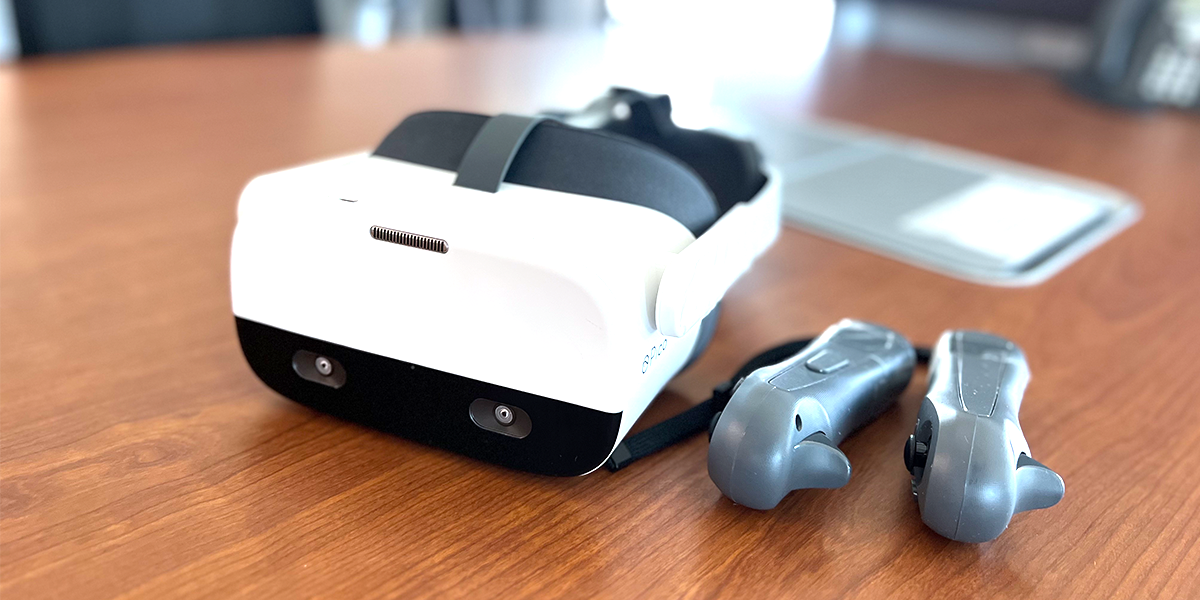
These can be difficult problems to solve. Enter Patty West, a researcher and assistant professor in the Michigan State University College of Nursing, who is the recipient of a three-year, $507,000 Mentored Research Scientist Development Award (K01) from the NIH National Institute of Nursing Research. West will explore how to address these gaps by engaging adolescents with intellectual disabilities, their families, and community members as collaborators in co-designing, adapting, and pilot-testing a tailored virtual reality-based physical activity intervention.
Many health interventions are not co-created with adolescents with intellectual disabilities, West said.
“When my son, who has an intellectual and developmental disability, chooses to participate in research, many of the surveys and instructional tools given to him do not encompass the use of plain language, visual aids, and health information tailored to his strengths,” she said.
For example, a survey, she noted, could rely on visual aids like using “thumbs up, thumbs down, thumbs sideways” pictures instead of a traditional scale, to aid in the interpretation and meaning of items. She added collaborative input from teens with intellectual disabilities is urgently needed to capture their lived experiences and facilitate their voices in creating inclusive health-promotion technology interventions.
Current research shows VR is highly adaptable to various ages, physical and cognitive abilities, and that it promotes physical activity among youth with intellectual disabilities. Its use in teens with chronic conditions has positively impacted social, emotional, physiological, and behavioral health. And West noted using VR in one’s own home can promote spontaneous moving around with family and peers, leveraging a key driver of physical activity.
West looks forward to collaborating with teens and their families as co-researchers for intervention selection and assessment adaptation to decrease cardiovascular risk factors, while enhancing health literacy and promoting optimal self-efficacy for health.
“My son is into gaming,” said West. “I’ve seen him experiencing these social opportunities, which can have some impactful, tangible benefits.”
The project will begin by assembling a small group of teenagers with intellectual disabilities, their parents, and community professionals as an advisory board team. From there, West and her team of expert interprofessional collaborators will modify measures and research tools to help teens track their success in the CON VR lab before working with another group of upwards of 40 teens participating in a VR home-based physical activity intervention. West said the hope is that teenagers will not only encourage long-term health and decrease risks during their formative years, but that it will also build a support network.
In addition to promoting physical activity among adolescents with intellectual disabilities, the grant will also provide funding for West, as a researcher, to gain additional training in new field areas, such as exercise physiology, measurement adaptation, and community-engaged approaches. West is also an alumna of the MSU College of Nursing PhD program.
“I didn’t think I’d ever have the chance like this,” West said of receiving her grant. “It’s wonderful to see so many people believing in this work. I am truly grateful for the support from my college colleagues and mentors.”
In particular, West is appreciative of the College of Nursing’s Drs. Gwen Wyatt and Kim Arceolo, as well as Matt Koss, Sophia Sinclair and graduate assistant Destiny Kanning. West is also thankful for MSU Drs. Sarah Douglas, Marisa Fisher, Janet Hauck, and Amanda Holmstrom; and her external mentors, Drs. Sarah Ailey from Rush University in Chicago and Brian Abery from the University of Minnesota.
“This initiative has the potential to change the lives of one of our most vulnerable populations,” West said.
NOTE: Research reported in this publication was supported by the National Institute of Nursing Research of the National Institutes of Health under Award Number K01NR022135. The content is solely the responsibility of the authors and does not necessarily represent the official views of the National Institutes of Health.
Published June 22, 2026.